


Can Dogs Eat Pineapple? 6 Potential Benefits You Might Not Know 🍍🐶
Pineapple might not be the first thing that comes to mind when you think of dog treats, but if your dog comes running the second you start chopping one up, you might be wondering... can dogs actually eat pineapple?
The answer is yes! Most healthy dogs can enjoy fresh pineapple in moderation.
But pineapple isn't just a sweet treat. It contains water, fibre, vitamins, minerals and an interesting group of enzymes called bromelain.
So let's take a look at six potential benefits of pineapple for dogs, plus a few claims you might have seen online that aren't quite as straightforward as they sound.
1. Pineapple can be a hydrating treat 💧
Pineapple has a naturally high water content, making small pieces of fresh pineapple a refreshing treat, particularly during warmer weather.
You could even freeze a few small chunks for a cooling summer snack.
Of course, pineapple should never replace your dog's normal access to fresh drinking water, but it's a tasty way of adding a little extra moisture to treat time.
2. It contains antioxidants 🍍
Pineapple naturally contains vitamin C and other antioxidant compounds.
Antioxidants help protect cells against oxidative damage caused by free radicals. Unlike humans, healthy dogs can actually produce their own vitamin C, so they don't need pineapple as a source of it.
That doesn't mean the nutrients found naturally in fruit can't form part of a varied diet, though.
Think of pineapple as a tasty little extra rather than something your dog nutritionally needs.
3. It's a source of manganese
One of pineapple's lesser-known nutritional benefits is its manganese content.
Manganese is an essential trace mineral involved in several processes within the body, including normal metabolism, enzyme function and healthy bone and cartilage development.
However, if your dog already eats a complete and balanced dog food, they should already be receiving the manganese they require.
So again, pineapple is a bonus treat rather than a necessary supplement.
4. Pineapple contains fibre 🌱
Fresh pineapple contains dietary fibre, which plays a role in normal digestive function.
A little fibre can be beneficial, but this is definitely one of those "more isn't necessarily better" situations!
Too much pineapple can result in bloating, an upset stomach or diarrhoea, particularly if your dog isn't accustomed to eating fruit.
Start with a very small amount and see how your dog's tummy handles it.
5. It contains bromelain 👀
This is probably the most interesting thing about pineapple.
Pineapple naturally contains bromelain, which isn't one single substance but a group of enzymes capable of breaking down proteins.
Bromelain has attracted scientific interest for several potential biological effects, including its possible anti-inflammatory properties.
However, there's an important distinction here.
Research into concentrated bromelain doesn't automatically mean that feeding your dog a few chunks of pineapple will produce the same effects.
The amount and concentration are very different, so we'd never recommend pineapple as a treatment for inflammation or any medical condition.
But it certainly makes pineapple an interesting fruit from a nutritional perspective!
6. It can make a healthier alternative to some treats 🦴
Sometimes the biggest benefit is the simplest one.
A couple of appropriately sized pieces of fresh pineapple can make a tasty, relatively low-fat alternative to some highly processed or calorie-dense treats.
It can also add a little variety to your dog's treat selection.
Treats and extras should generally make up no more than around 10% of your dog's daily calories, with the remaining 90% coming from a complete and balanced diet.
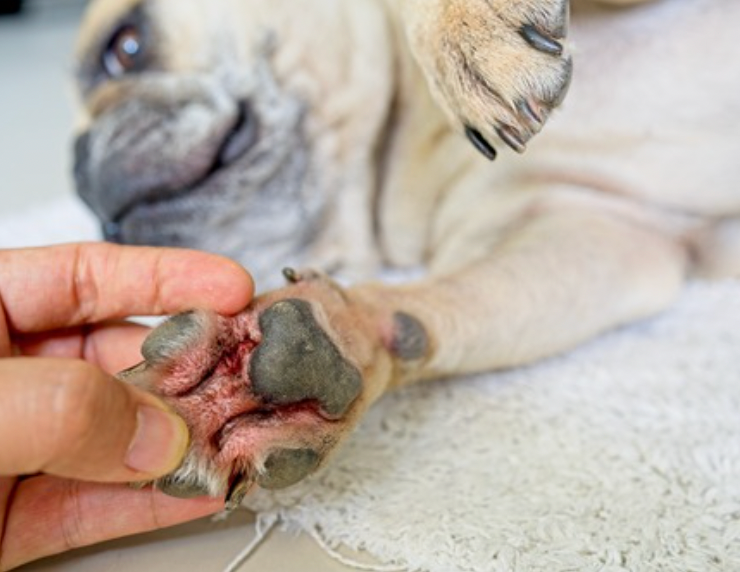
Can pineapple help with yeast in dogs?
This is something we've seen discussed quite a lot online, and it's actually what got us looking into pineapple in the first place!
Because bromelain has been researched for various biological properties, you'll sometimes see claims that pineapple can help dogs suffering from yeast.
Unfortunately, there isn't good evidence showing that feeding pineapple gets rid of a dog's yeast infection.
One of the yeasts commonly associated with canine skin problems, Malassezia pachydermatis, naturally lives on dogs' skin. Problems arise when circumstances allow it to overgrow.
Recurring yeast problems can be associated with underlying issues such as allergies or changes to the skin environment, so it's much more important to work out why the yeast keeps returning than to rely on a particular food.
Pineapple also naturally contains sugar. You'll sometimes hear that "sugar feeds yeast", but the idea that eating a piece of fruit directly feeds yeast living on your dog's skin is an oversimplification.
So while pineapple can be a perfectly suitable occasional treat, we wouldn't recommend it as a yeast treatment.
What about pineapple for dogs that eat poo? 💩
Yep... we're going there. 😂
Another popular claim is that feeding pineapple can stop dogs eating their own poo, otherwise known as coprophagia.
The theory is that pineapple or bromelain alters the taste or smell of the dog's poo, making it less appealing to eat.
It sounds convincing, and you'll find plenty of owners online who swear by it.
However, there isn't strong scientific evidence showing that pineapple reliably stops coprophagia.
If your dog suddenly starts eating poo or does it frequently, it's worth discussing it with your vet rather than relying solely on pineapple.
How should I give pineapple to my dog?
Stick to fresh, ripe pineapple flesh cut into small, manageable pieces.
Remove the leaves, tough outer skin and hard core before offering it to your dog. These aren't suitable treats and large pieces could potentially cause choking or digestive problems.
We'd also avoid pineapple canned in sugary syrup. Your dog definitely doesn't need the extra sugar!
Start with a tiny piece, particularly if they've never eaten pineapple before.
Can puppies eat pineapple?
Small amounts of fresh pineapple are generally okay for healthy puppies that are old enough to eat solid food, but their digestive systems can be more sensitive.
Their main diet is also particularly important while they're growing, so treats should remain a very small part of what they eat.
Are there any dogs that shouldn't eat pineapple?
Pineapple won't be suitable for every dog.
Because it contains natural sugars, owners of dogs with diabetes or conditions requiring dietary management should speak to their vet before introducing it.
The same applies if your dog is on a veterinary diet or completing a food elimination trial. Adding seemingly harmless treats during an elimination diet can interfere with the results.
And if pineapple gives your dog diarrhoea, sickness or obvious tummy discomfort, simply stop giving it.
The Bully Beauty verdict 🩵
So, can dogs eat pineapple?
For most healthy dogs, absolutely! 🍍
In moderation, fresh pineapple can provide hydration, fibre, antioxidants and nutrients while making a tasty alternative to some traditional treats. Its naturally occurring bromelain also makes it particularly interesting from a nutritional perspective.
But we don't believe in turning an interesting ingredient into a miracle cure.
Pineapple hasn't been proven to cure yeast infections, stop inflammation or magically prevent poo eating, despite some of the claims you might see online.
Give it because your dog enjoys it, keep the portion sensible and consider any nutritional benefits a lovely little bonus.
Because sometimes a piece of pineapple can just be... a piece of pineapple. 😂🍍🩵
This blog is for general educational purposes and isn't a substitute for veterinary advice. If you're concerned about your dog's health, skin, digestion or diet, speak to your vet.


Leave a comment
This site is protected by hCaptcha and the hCaptcha Privacy Policy and Terms of Service apply.