

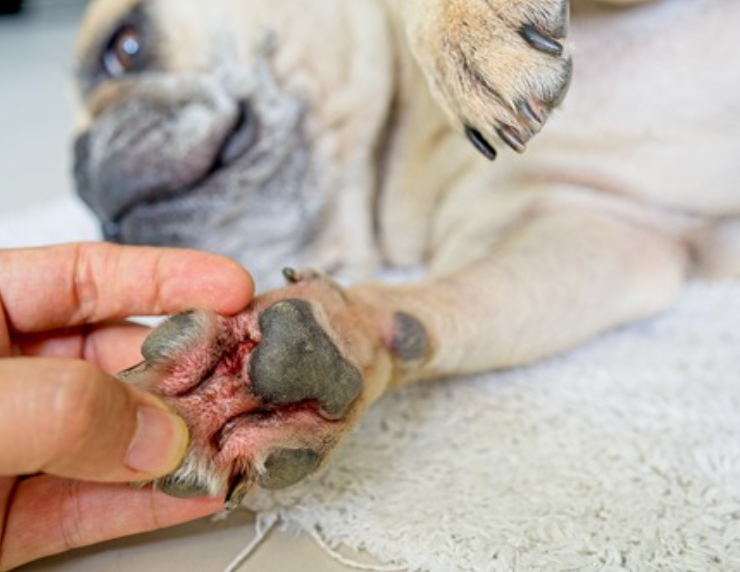
If you've ever noticed your dog constantly licking their paws, scratching their ears or developing a distinctive smell from their skin or wrinkles, you may have wondered whether yeast could be the culprit.
Yeast problems are relatively common in dogs, particularly in warm, moist areas such as the paws, ears and skin folds. For our wrinkly friends, those lovely little folds can unfortunately create the perfect environment for moisture and debris to collect.
But here's something important: yeast isn't always the enemy.
Let's talk about what yeast actually is, why it sometimes becomes a problem and what you can do to help keep your dog's skin happy and healthy.
What is yeast in dogs?
One of the main types of yeast associated with canine skin problems is called Malassezia pachydermatis.
Malassezia naturally lives on the skin of many healthy dogs. In normal amounts, it generally doesn't cause a problem.
It's when conditions allow the yeast to multiply excessively that dogs can develop Malassezia dermatitis, commonly referred to as a yeast infection.
So the aim isn't necessarily to create a completely "yeast-free" dog. It's about maintaining healthy skin where the organisms naturally living there remain balanced.

What does a yeast infection look like?
Yeast doesn't look exactly the same on every dog, but there are some common signs owners can look out for.
These can include:
Itching and scratching: Your dog may suddenly seem much itchier than usual.
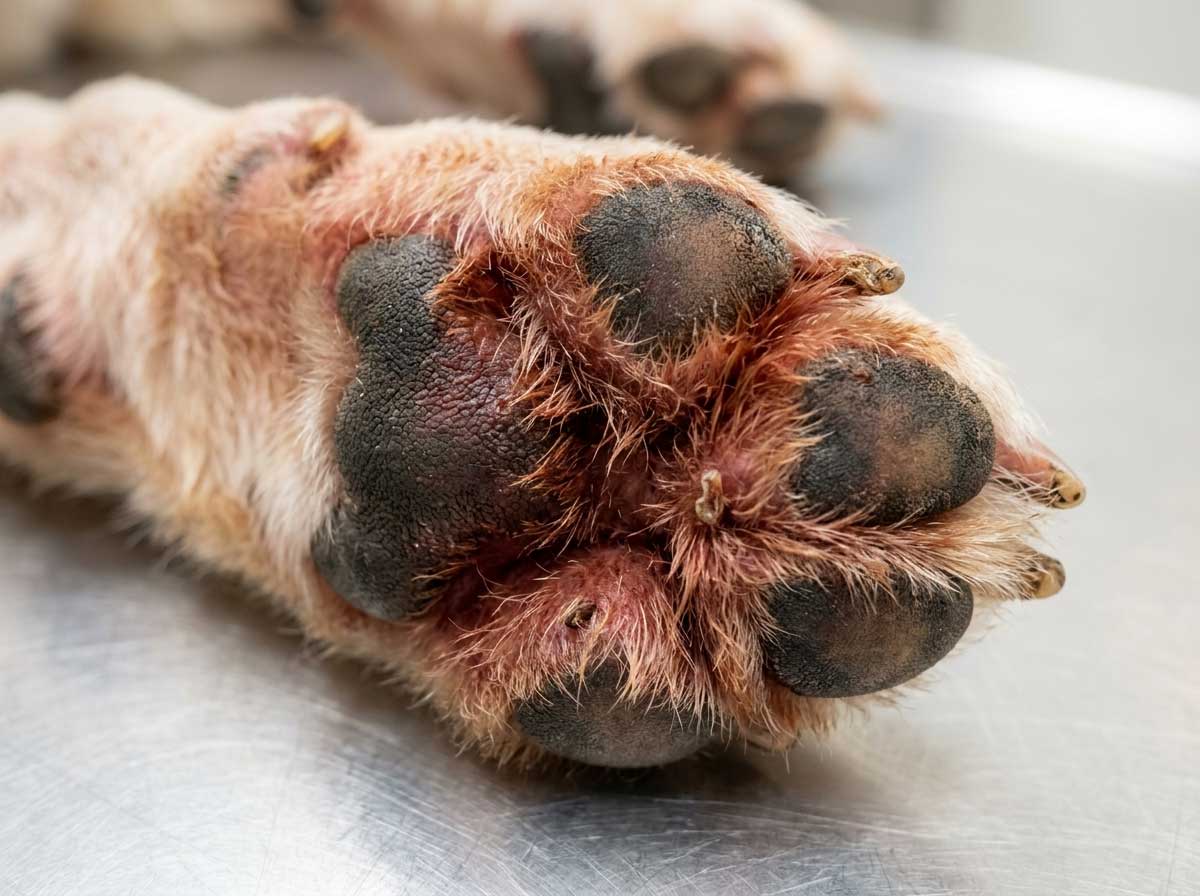
Paw licking and chewing: Constantly licking between the toes or chewing the paws can be a sign that something is irritating them.
Red or irritated skin: Particularly between toes, around the ears, under the neck or inside skin folds.
A strong or musty smell: Yeast affected skin can develop a distinctive odour. Some owners describe it as musty, cheesy or similar to corn chips.
Greasy or flaky skin: The coat or skin may feel unusually oily, waxy or flaky.
Darkened or thickened skin: With chronic problems, affected skin can become darker and thicker.
Recurring ear problems: Yeast can also be involved in ear infections, potentially causing itching, head shaking, redness, odour and discharge.
These symptoms aren't exclusive to yeast, though. Bacteria, allergies, parasites and other skin conditions can look very similar, which is why persistent symptoms are worth having checked by a vet.
Why do dogs get yeast infections?
This is perhaps the most important question.
If yeast naturally lives on a dog's skin, why does it suddenly become a problem?
Usually, something changes the environment of the skin and allows yeast to multiply.
One major factor can be allergies. Dogs suffering from environmental or food allergies can develop inflamed or damaged skin, making secondary yeast infections more likely.
Other factors can include excessive moisture, increased skin oils, hormonal or immune problems and certain medications or underlying skin conditions.
And then there's anatomy.
Why are wrinkly dogs particularly vulnerable?
Hello, Bulldogs, Frenchies, Pugs and Shar Peis. 👀😂
Skin folds create areas where there is less airflow and where moisture, natural oils, dirt and debris can accumulate.
Add warmth into the equation and you've created an environment microorganisms may absolutely love.
This doesn't mean every wrinkly dog will develop yeast problems, but it does mean regular fold care can be particularly important.
The same principle applies to paws. Moisture can remain between the toes after walks, baths or swimming, while licking adds even more moisture.
Why does my dog's yeast keep coming back?
If you've treated yeast only for it to return a few weeks later, you're definitely not alone.
Recurring yeast can sometimes mean that the underlying trigger hasn't been addressed.
Imagine repeatedly mopping up water from a leaking pipe without fixing the actual leak.
You can clear up the water each time, but it's going to keep coming back.
Yeast can be similar.
If an allergy, chronic skin condition or another underlying issue is continually disrupting the skin, treating the secondary yeast infection may improve things temporarily without solving the reason it developed.
That's why dogs experiencing repeated infections should be assessed by a vet.
Does diet cause yeast in dogs?
This subject causes so much confusion online.
You'll regularly see claims such as:
"Carbs feed yeast."
"Cut out all sugar."
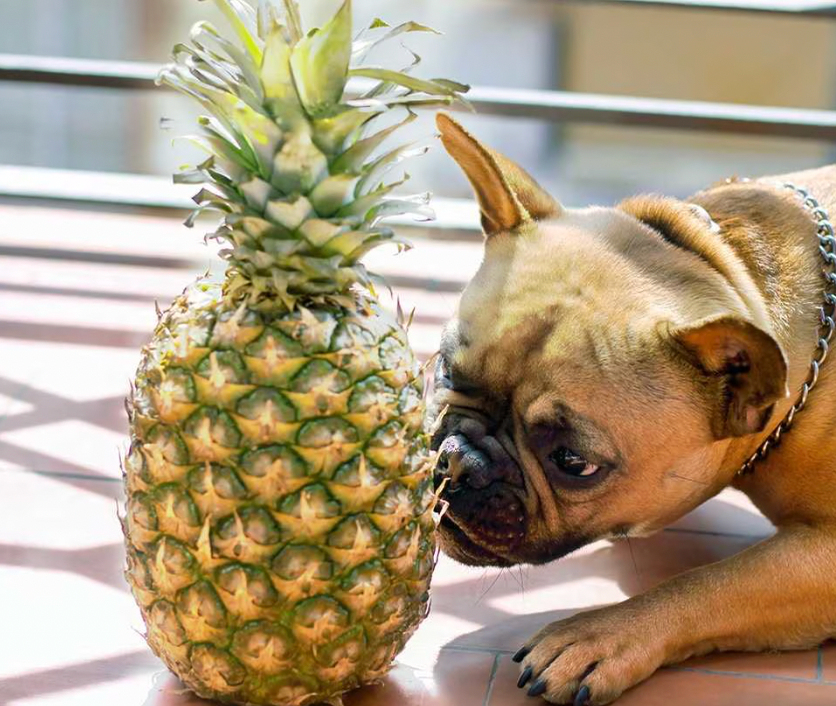
"Dogs with yeast can't eat fruit."
The reality is much more complicated.
There's currently not good evidence that simply eating carbohydrates directly causes Malassezia yeast living on a dog's skin to multiply.
However, diet can still be relevant for some dogs.
A dog with a genuine food allergy may develop itchy, inflamed skin, which can subsequently make secondary bacterial or yeast infections more likely.
That's different from saying carbohydrates themselves are feeding the yeast.
If a food allergy is suspected, vets may recommend a properly controlled elimination diet rather than randomly removing ingredients from your dog's food.
What about chicken?
Chicken gets blamed for almost everything in the dog world. 😂
A dog can have an allergy to chicken protein, just as they can react to other dietary proteins.
But chicken doesn't automatically cause yeast infections.
If your dog genuinely has an adverse reaction to a particular ingredient that contributes to itchy and inflamed skin, removing that ingredient under appropriate guidance may help address the underlying problem.
That's very different from every yeasty dog needing a chicken-free diet.
Can probiotics help with dog yeast?
This is another increasingly popular topic.
The gut, immune system and skin have complex relationships, and researchers continue to investigate the potential role of probiotics in canine health.
However, probiotics shouldn't be treated as a guaranteed cure for an active yeast infection.
If you're considering supplements for a dog with recurring skin problems, particularly alongside medication or a veterinary diet, speak to your vet about what's appropriate for your individual dog.
What about apple cider vinegar?
Another internet favourite! 🍎
You'll find countless recipes recommending apple cider vinegar for yeast affected skin.
But we'd be very cautious with DIY acidic treatments.
Putting vinegar onto already red, cracked, inflamed or damaged skin can sting and potentially cause further irritation. It also shouldn't be used inside your dog's ears unless specifically advised by a vet.
Natural doesn't automatically mean gentle.
How are yeast infections treated?
Treatment depends on where the infection is, how severe it is and what caused it.
A vet may use antifungal treatments, which can include medicated shampoos, topical treatments, ear treatments or oral medication depending on the individual case.
They may also take samples from the skin or ears to determine whether yeast, bacteria or something else is causing the problem.
For recurring cases, investigating allergies or another underlying condition can become an important part of treatment.
Can you prevent yeast problems?
You can't guarantee your dog will never experience yeast, but good everyday skin care can help maintain a healthier environment.
For wrinkle prone dogs in particular, regularly checking folds allows you to spot changes early.
Keeping problem areas clean and appropriately dry is important. Pay attention to paws after wet walks and swimming, and make sure dense skin folds aren't continually damp.
Bathing can also form part of a healthy grooming routine, although over washing or using inappropriate products can irritate the skin barrier.
Most importantly, learn what's normal for your dog.
If their folds suddenly smell different, their paws become red or they start licking significantly more than usual, don't ignore the change.
Where does Bully Beauty fit in? 🩵
Our philosophy has always been about regular, skin conscious grooming, particularly for those awkward little areas our wrinkly friends need some extra help keeping clean.
Our Wrinkle Wipes are designed for routine cleaning of skin folds and contain chlorhexidine and ketoconazole, alongside skin friendly ingredients including aloe vera, shea butter and coconut oil.
Our wipes are also alcohol free, because we're conscious that frequently cleaned areas can already be sensitive.
However, there's an important distinction we always want to make:
Grooming products shouldn't replace veterinary treatment for an infection.
If your dog's skin is very red, painful, broken, swollen, producing discharge or has a persistent strong smell, or your dog seems uncomfortable, we'd recommend speaking to your vet rather than simply increasing how often you're cleaning it.
The Bully Beauty verdict 🩵
Yeast is a normal part of the microscopic world living on your dog's skin.
The problem isn't simply that yeast exists. It's when something allows it to overgrow.
So if your dog repeatedly struggles with yeasty paws, ears or folds, don't just ask:
"How do I get rid of the yeast?"
Also ask:
"Why does my dog's yeast keep coming back?"
Regular grooming, keeping vulnerable areas clean and dry and paying attention to changes in your dog's skin can all form part of good everyday care.
But recurring infections deserve proper investigation.
Because when it comes to your dog's skin, treating what's happening on the surface is important, but understanding why it's happening in the first place can be even more valuable. 🐶🩵
This article is for general educational purposes only and isn't intended to diagnose or treat any condition. If you think your dog has a skin or ear infection, or symptoms are persistent or recurring, speak to your vet.

Leave a comment
This site is protected by hCaptcha and the hCaptcha Privacy Policy and Terms of Service apply.